An experiment in how generative agents reason about Polymarket
Individual bet performance tracked over time with daily and cumulative profit indicators
Each line represents a separate prediction market position. The daily total shows aggregate profit/loss per day across all positions. All predictions use an AI predictive engine with a consistent betting strategy. This chart's predictions are based on equal investment amounts across all options.
Based on simulated agent behavior

Based on simulated agent behavior

Based on simulated agent behavior
Based on simulated agent behavior

Based on simulated agent behavior

Based on simulated agent behavior
Based on simulated agent behavior
Based on simulated agent behavior

Based on simulated agent behavior

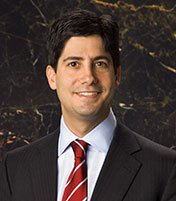
Comprehensive competitive analysis across five dimensions—personal loyalty, monetary policy alignment, Senate confirmation feasibility, Fed experience, and market reaction—evaluating the nomination probability and market impact of three candidates: Kevin Warsh, Kevin Hassett, and Christopher Waller. Analysis conducted January 2026.
"Through a Multi-Criteria Decision Analysis framework integrating expert insights from four personas (MAGA Insider, Capitol Observer, Monetary Sage, Policy Watcher), our model indicates Kevin Warsh is most likely to be nominated (45% probability). Warsh uniquely achieves perfect scores on the two most heavily weighted criteria—personal loyalty (40% weight) and monetary policy alignment (30% weight)—while maintaining sufficient institutional credentials to survive Senate confirmation. He represents the optimal balance: a trusted longtime ally who will execute the president's vision without institutional resistance, combined with prior Fed Governor experience (2006-2011) that provides baseline Senate defensibility. The critical risk factor is Senate confirmation feasibility—moderate Republican opposition could force a strategic pivot to Kevin Hassett or Christopher Waller. However, Warsh's unique combination of loyalty, policy alignment, and institutional credibility makes him the frontrunner."
If Kevin Warsh is nominated: Initial market volatility as markets assess commitment to independence, but recovery likely within 30 days post-confirmation. Senate confirmation process will be contested—moderate Republican opposition represents the single greatest risk factor. If confirmation appears untenable, strategic pivot to Kevin Hassett (backup plan) or Christopher Waller (compromise candidate). Warsh's unique combination of loyalty, policy alignment, and institutional credibility positions him as the optimal balance candidate. If Kevin Hassett is nominated: Short-term market gains on rate cut expectations, but faces long-term 'political-market' negative feedback spiral if inflation rekindles. If Christopher Waller is nominated: Major market positive, 6-12 months policy certainty premium, but must overcome political resistance disadvantage.
The 70/30 Rule: Personal loyalty (40%) and monetary policy alignment (30%) together constitute 70% of the decision calculus. Warsh achieves perfect scores on both, making him irreplaceable within the current candidate pool. The fundamental tension is the inverse relationship between loyalty and confirmability—Warsh is the only candidate who achieves both high loyalty scores and plausible (though difficult) confirmation. This positioning makes him the frontrunner despite confirmation risks. Key insight: Senate confirmation feasibility represents the single greatest threat. Early indicators of moderate Senator opposition could force a strategic pivot, but Warsh's unique profile—a 'soldier, not a saboteur' with Fed experience—makes him the optimal choice for balancing political demands with institutional credibility.